Home / News & Insights / Understanding Solar: How It Actually Works
Before you compare a single quote, it helps to understand what you’re actually buying. Here’s solar power explained simply: the physics, the parts, and the numbers that actually matter.
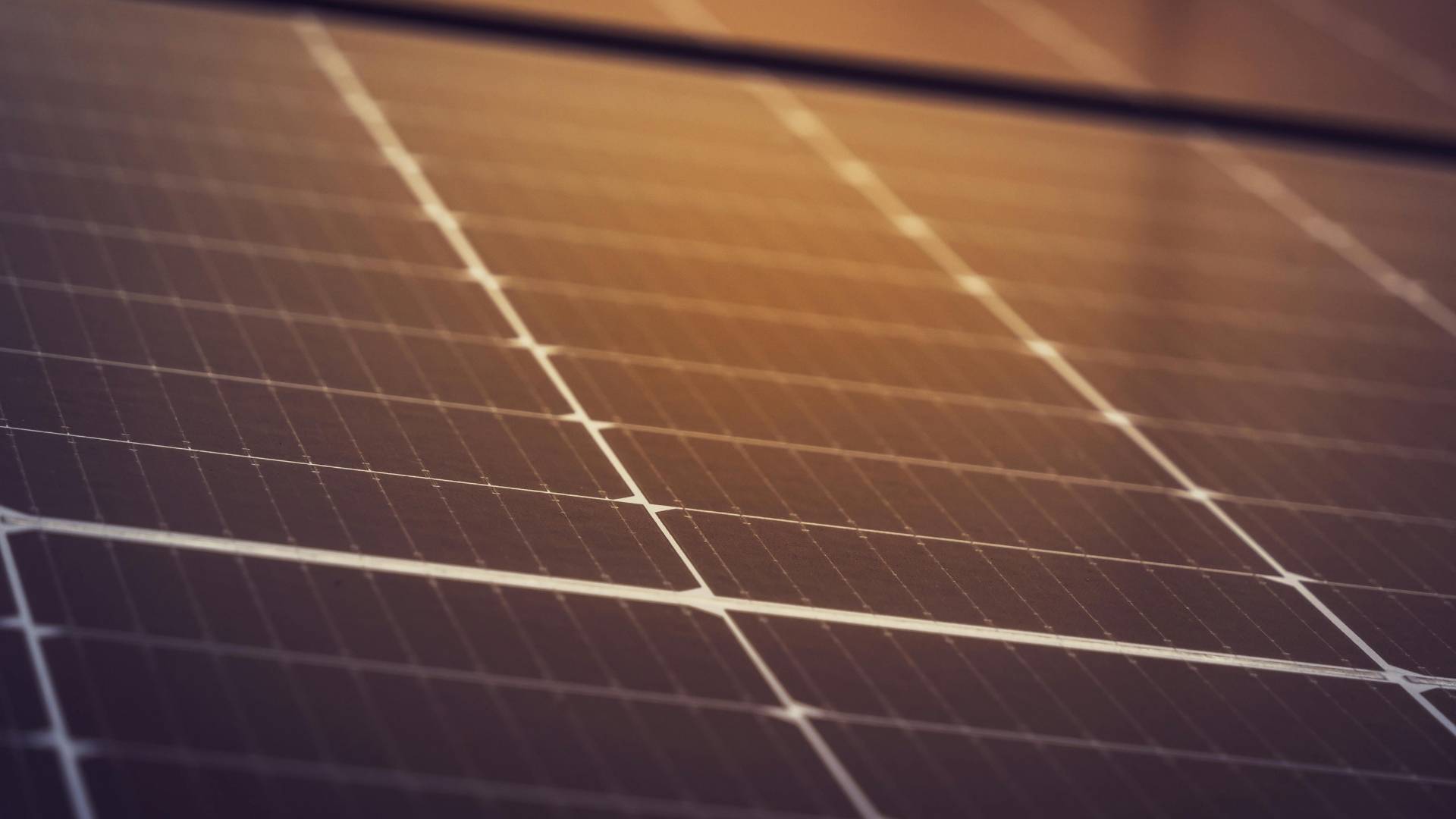
At its core, a solar panel is just a grid of silicon cells, each one roughly the size of a small book. When sunlight hits silicon prepared in a particular way, it knocks electrons loose and gets them flowing in a single direction. This phenomenon is called the photovoltaic effect. That flow of electrons is electricity.
Each individual cell only produces a small amount of power on its own, a fraction of a volt and a few amps. To get anything useful, dozens of these cells are wired together in a single panel. Most panels installed today use a “half-cut” cell design, where each cell is physically split in two. This manufacturing tweak reduces internal resistance and slightly improves how much power the panel can produce for its size.
At the time of writing, a typical residential panel today produces somewhere in the 475 watt range. Wire enough of them together, commonly 14 panels for a 6.6kW system, and you’ve got a rooftop array capable of generating several kilowatts of electricity on a sunny day.
A note worth knowing: because cells in a panel are wired in a series (like old-style Christmas lights), shading even a small section of one cell can restrict output across the whole string. This is why something as small as a patch of leaf litter or bird droppings can cut a panel’s output by far more than the shaded area alone would suggest. It’s worth keeping in mind when we talk about roof shading in our other guides.
A rooftop full of panels doesn’t do anything on its own. A complete system needs several other components working together.
Nearly every one of these components is where a rushed or cut-price installation tends to show its weaknesses, not in the panels themselves, which have become a genuinely reliable, commodity part of the system.
This is worth understanding properly, because it trips up almost everyone at some point, including plenty of people in the industry who really should know better.
Power (measured in kilowatts, kW) is a measure of rate: how fast electricity is being generated or used at any given moment. It’s the size label on your solar system. A “6.6kW system” is describing its maximum generating rate under ideal conditions.
Energy (measured in kilowatt-hours, kWh) is a measure of total amount: how much electricity has actually been generated, stored, or used over a period of time. Your electricity bill is charged in kWh, not kW. A system generating 5kW for one full hour has produced 5kWh of energy.
Here’s where it gets counterintuitive: a “6.6kW” system will never actually output 6.6kW.
There are two reasons for this.
First, most 6.6kW systems are paired with a 5kW inverter, which physically caps how much power can flow through at once. The system is limited to 5kW regardless of how much the panels could theoretically produce.
Second, panels only reach their rated peak output under close-to-perfect conditions: direct midday sun, moderate temperatures (heat actually reduces panel efficiency), clean panels, and minimal wiring losses. In the real world, even a well-installed system typically peaks at around 80% of its nameplate panel capacity on a good day.
None of this is a fault or a sign of underperformance. It’s just how solar physically works, and it’s worth knowing so a perfectly healthy system doesn’t look “broken” to you on a monitoring app.
A rough (and genuinely useful) rule of thumb: multiply your system’s size in kW by a location-specific daily average to estimate typical daily output in kWh.
For Sydney, that multiplier sits at roughly 4 kWh per kW of installed capacity per day on average across the year, lower in winter and higher in summer. So a 6.6kW system in Sydney would be expected to produce somewhere around 26kWh on an average day, and a 10kW system somewhere around 40kWh.
A few things shift that number:
If a quote promises output well above what these averages would suggest for your specific roof and orientation, it’s worth asking exactly how that number was calculated.
Solar reduces your electricity costs in two distinct ways.
Here’s the part that catches a lot of new solar owners off guard.
Your self-consumption savings don’t show up anywhere on your bill.
Your retailer can only see what you’ve exported. They have no visibility into how much grid electricity you avoided buying in the first place.
This leads to a common, genuinely understandable complaint:
“My bill only shows a $150 solar credit. Is that really all I’m saving?”
In reality, the export credit is often the smaller half of the picture. The larger saving is simply the electricity you never had to buy, and it’s invisible unless you’re using a consumption monitor to actually see it.
A well-sized solar system alone can get many households close to a very low, or even occasionally negative, electricity bill, but it has two structural limitations no amount of extra panels can fix.
A battery addresses both of these: storing daytime surplus for use after dark, and (depending on the system) providing backup power to some or all of your home’s circuits during an outage.
Whether a battery makes financial sense on top of solar depends heavily on your household’s overnight electricity use and the rebates and finance available to you right now. That’s exactly what our dedicated guides to the battery rebate and the NSW interest-free loan go into in detail.
Solar is genuinely simple physics wrapped in a system with several components that all need to work correctly together. Most of what actually goes wrong with an installation has nothing to do with the panels themselves.
Understanding the basics here, how output really compares to nameplate size, why self-consumption savings are invisible on your bill, and what a full system actually includes, puts you in a stronger position before you compare a single quote.
Book a free, on-site solar assessment with Sydney Solar and Roofing and we’ll walk you through exactly what a system would look like for your specific roof: real expected output, real component list, no inflated numbers.